

Key takeaways
- Where the slow drain is tells you whether the problem is local or in the main line.
- Kitchen grease and food scraps build up in layers over months.
- Wipes labeled flushable should still go in the trash.
- Chemical drain cleaners often leave a partial clog and can harm old pipes.
- A strainer and a few kitchen habits prevent most repeat clogs.
Where the clog is tells you the cause
Before you buy anything, look at which drains are affected. A single slow sink or tub points to a blockage in that fixture's trap or the short pipe behind it. Two or three fixtures slowing down together point to a branch line. When the lowest drains in the house are slow or gurgling, and the toilets bubble when other water runs, the blockage is likely in the main drain or the sewer line.
That difference matters. A plunger or a hand auger can clear a local clog. A main line blockage, especially in an older home with a clay or cast iron sewer lateral, may involve roots or a damaged pipe, and clearing it again and again will not fix it. The full guide to drains, sewer lines and basement backups explains how to tell them apart.
Kitchen grease and food waste
Kitchen drains clog from cooking fat, oils, and food that sticks to it. Fat leaves the sink warm and liquid, then cools in the pipe and sticks to the wall. Soap film and food particles stick to that layer, and over months the opening shrinks. Hot water or dish soap may seem to clear it, but it usually just pushes the grease further along, where it settles again.
A garbage disposal does not solve this. It chops food finer, but it does not dissolve it, and fats still coat the pipe. Coffee grounds, eggshells, rice, pasta, potato peels, and stringy vegetables like celery tend to pack together and slow the drain.
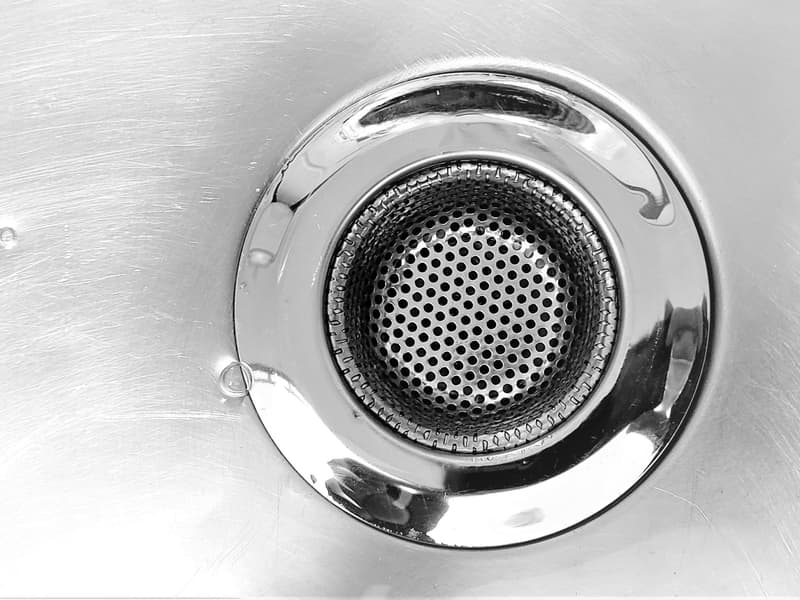
The better approach is to scrape plates into the trash or compost, wipe greasy pans with a paper towel before washing, and pour cooled cooking fat into a can or jar and throw it out. A strainer in the sink catches most of what is left.
Hair, soap, wipes and toilet paper
In bathrooms, the usual culprit is hair mixed with soap scum. Hair catches on the stopper or just below it in the trap and gathers into a mat. A drain strainer or a stopper that you clean regularly prevents most of it. A small plastic drain tool or a hand auger can pull out what has already built up.
Toilets clog because of what is flushed. Too much paper at once can do it, but wipes, paper towels, cotton swabs, dental floss, feminine products and cat litter do far more damage. Wipes labeled flushable are the biggest offender because they do not break apart in water the way toilet paper does. They catch on rough pipe joints and roots and form a mat that traps other waste. Keep a small trash can in the bathroom and use it.
If you have to plunge a toilet more than occasionally, or you see the water rise in a tub or shower when the toilet flushes, the clog may be farther down the line than the toilet itself.
Why chemical drain cleaners cause problems
Store-bought drain cleaners are tempting, but they have real downsides. They are caustic, so spills and splashes can burn skin and eyes, and mixing two products can release dangerous fumes. They work on the center of a clog and may leave a narrow channel instead of removing the buildup, so the drain clears for a while and then slows again. If the product does not work, the pipe is full of caustic water that anyone clearing it must work around.
Older fittings, and some metal and plastic parts, can be damaged by repeated use. In a house with a septic system, harsh chemicals can also upset the system.
A plunger, a hand auger, or a professional drain cleaning with a cable or a water jet removes the material instead of just opening a gap. If you have already poured a chemical cleaner into the drain, tell the plumber and do not try to plunge or snake it yourself, because splashes can be dangerous.
Habits that keep drains running
Most of the work is small and regular:
- Use a strainer in the kitchen sink, tub and shower, and empty it into the trash.
- Never pour grease or oil down the drain, and wipe pans first.
- Flush only toilet paper and human waste.
- Run hot water for a short time after using the disposal, and keep it to small food scraps.
- Pull hair from the stopper before it falls into the trap.
- Pay attention to gurgling and slow drains, and deal with them while they are still small.
If a drain keeps coming back, or more than one fixture is slow, ask a plumber to run a camera and look. You can read about tree roots in sewer lines, another common reason drains keep clogging, or get in touch to describe what you see.
Frequently asked questions
Why does my kitchen sink keep clogging even though I use hot water?
Hot water moves grease down the pipe, but it cools and sticks farther along. The layer builds over time and traps food particles. Keeping fat out of the drain, and having a plumber clean the line if it is already built up, works better than flushing with hot water.
Can I put coffee grounds or eggshells down the disposal?
It is better not to. They do not dissolve and tend to collect in the trap and the pipe beyond it, where they combine with grease and slow the drain. Put them in the trash or a compost pile.
When should I stop trying to clear a clog myself?
If more than one fixture is slow, if drains gurgle, if sewage smells appear, or if the clog returns soon after you clear it, the problem is probably in the main line and needs a plumber with the right equipment.
4 min read.